Stinging insect infestations pose direct physiological risks to families and companion animals. In Upstate South Carolina, native species like the red paper wasp and European paper wasp build open-comb umbrella nests…
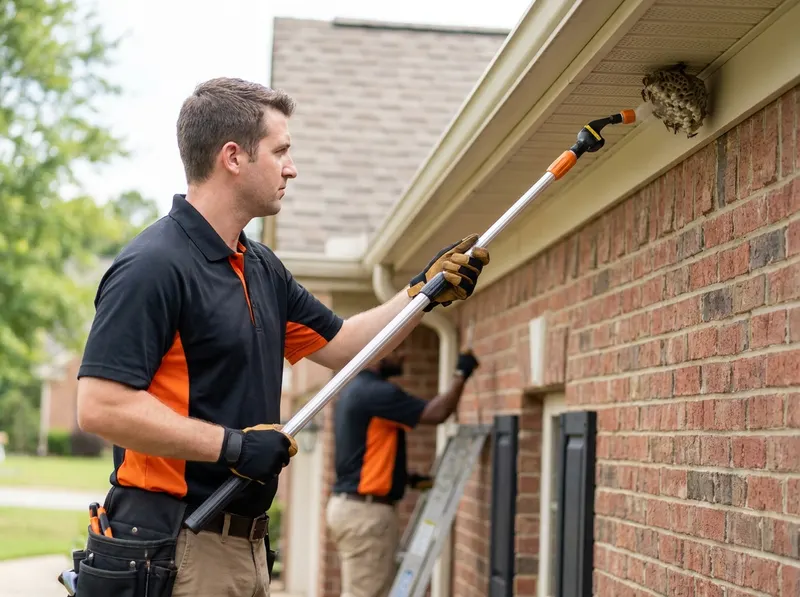
Stinging insect infestations pose direct physiological risks to families and companion animals. In Upstate South Carolina, native species like the red paper wasp and European paper wasp build open-comb umbrella nests beneath the architectural eaves of homes in North Main and Overbrook. Unlike honey bees managed under the Clemson University Department of Plant Industry pollinator guidelines, social paper wasps defend territory aggressively when disturbed by lawn equipment, exterior painting, or door vibrations. When paper wasps build inside attic louvers, fascia voids, or children's playsets in Augusta Road, simple hardware-store aerosol sprays routinely fail because the stream disperses before reaching deep structural framing, driving stressed workers through interior ceiling vents instead of eliminating the colony.
Effective management relies on species-specific intervention governed by the Environmental Protection Agency safe pest control guidelines. The treatment sequence executes in five defined steps: Step 1 establishes physical perimeter containment to protect family members and pets inside the residence. Step 2 applies a targeted, quick-knockdown botanical or pyrethroid micro-deposit conforming to National Pesticide Information Center active ingredient standards directly onto the comb. Step 3 mechanically scrapes the brood comb down to bare wood or masonry, destroying structural anchor points. Step 4 introduces an inorganic repellent dust such as silica aerogel regulated by the National Institute for Occupational Safety and Health into underlying cracks to prevent seasonal queen re-colonization. Step 5 inspects exterior window framing, porch soffits, and roof decking for secondary colonies.
Greenville homes adjacent to moist canopy belts, such as Alta Vista along Cleveland Park, Parkins Mill near the Reedy River, or Botany Woods, experience heightened wasp pressure because natural water sources and insect prey remain abundant through October. High Upstate summer humidity weakens aerosol droplet stability; therefore, CanyonFern Pest Specialists applies weather-resistant micro-encapsulated formulations based on University of Kentucky Department of Entomology social wasp criteria. Property owners dealing with high cathedral ceilings in Verdae or decorative exposed timber in the West End face unique accessibility trade-offs: standard ladder work handles single-story eaves, while second-story dormers and chimney voids demand telescoping dusting rods to treat access points without damaging fragile historic shake or masonry. For structural protection details, refer to the South Carolina Department of Public Health vector guidelines. Additional resources on structural integrity and outdoor safety can be verified through the Occupational Safety and Health Administration sanitation standard, the American Lyme and Vector Disease Foundation, and regional horticultural extensions like the Clemson Home & Garden Information Center wasp bulletin. Call (864) 215-5116 to arrange a technician assessment.
Every job gets a firm, written price after an on-site visit.
Tell us about your stinging insect and paper wasp removal job in Greenville and we'll send a clear, written quote, usually the same day.
 CanyonFern Pest Specialists